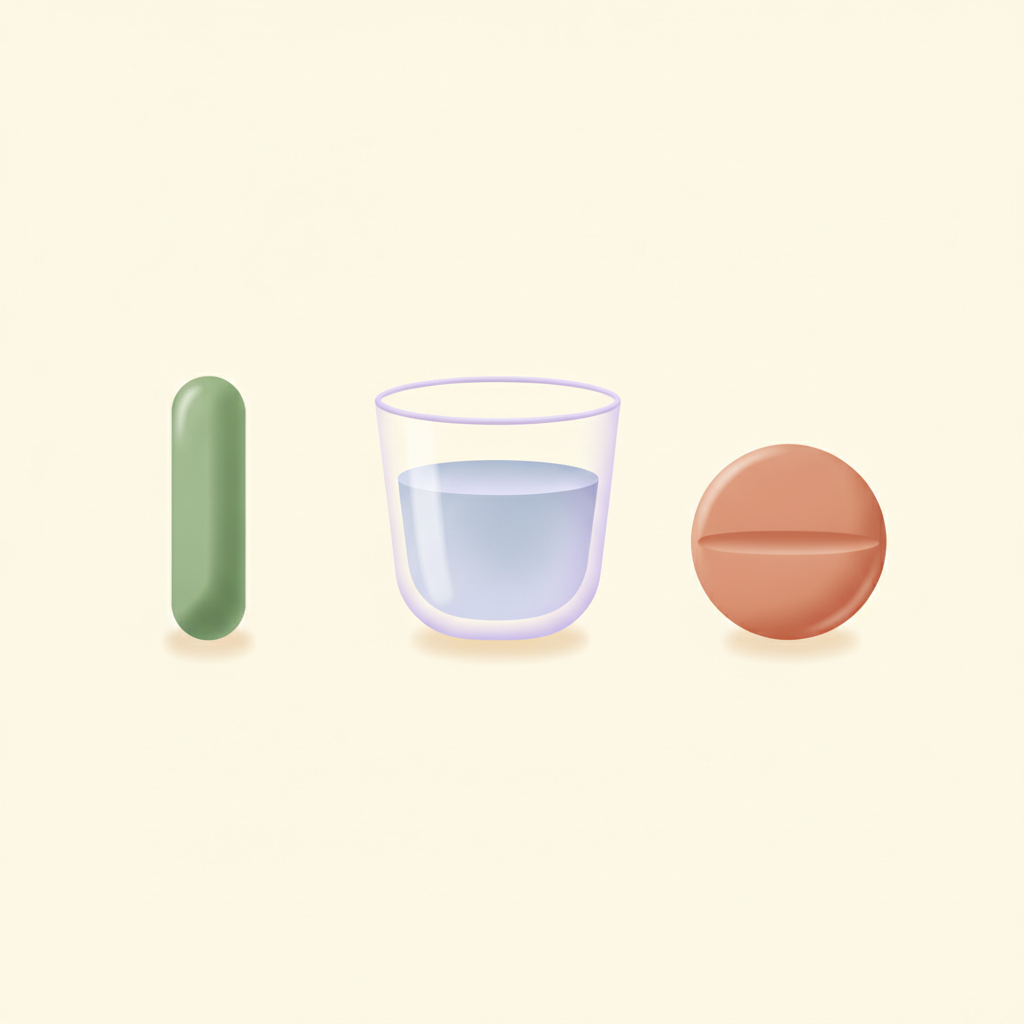

Baking soda (sodium bicarbonate) is a genuine antacid — dissolved in water, it directly neutralizes stomach acid, and the relief people report from it is a real chemical effect, not a placebo. It's essentially the same mechanism as many over-the-counter antacids, just without the added flavoring or packaging.
Why it's not a long-term solution
Baking soda is high in sodium, and using it regularly can affect blood pressure and electrolyte balance over time — occasional use for a single bad episode is different from a daily habit. It also doesn't address the underlying cause of reflux, so relying on it repeatedly can mask a pattern that's worth investigating with a doctor instead.
How people typically use it
A small amount (roughly half a teaspoon) dissolved in a glass of water, taken for an acute episode rather than as a preventive measure. It shouldn't be taken on a full stomach, since the reaction can cause bloating or discomfort, and it's not recommended for people managing sodium intake for blood pressure or heart conditions.
This isn't personal medical advice — if you're taking baking soda for heartburn more than occasionally, that's a sign to talk to a doctor about the underlying pattern rather than the symptom.