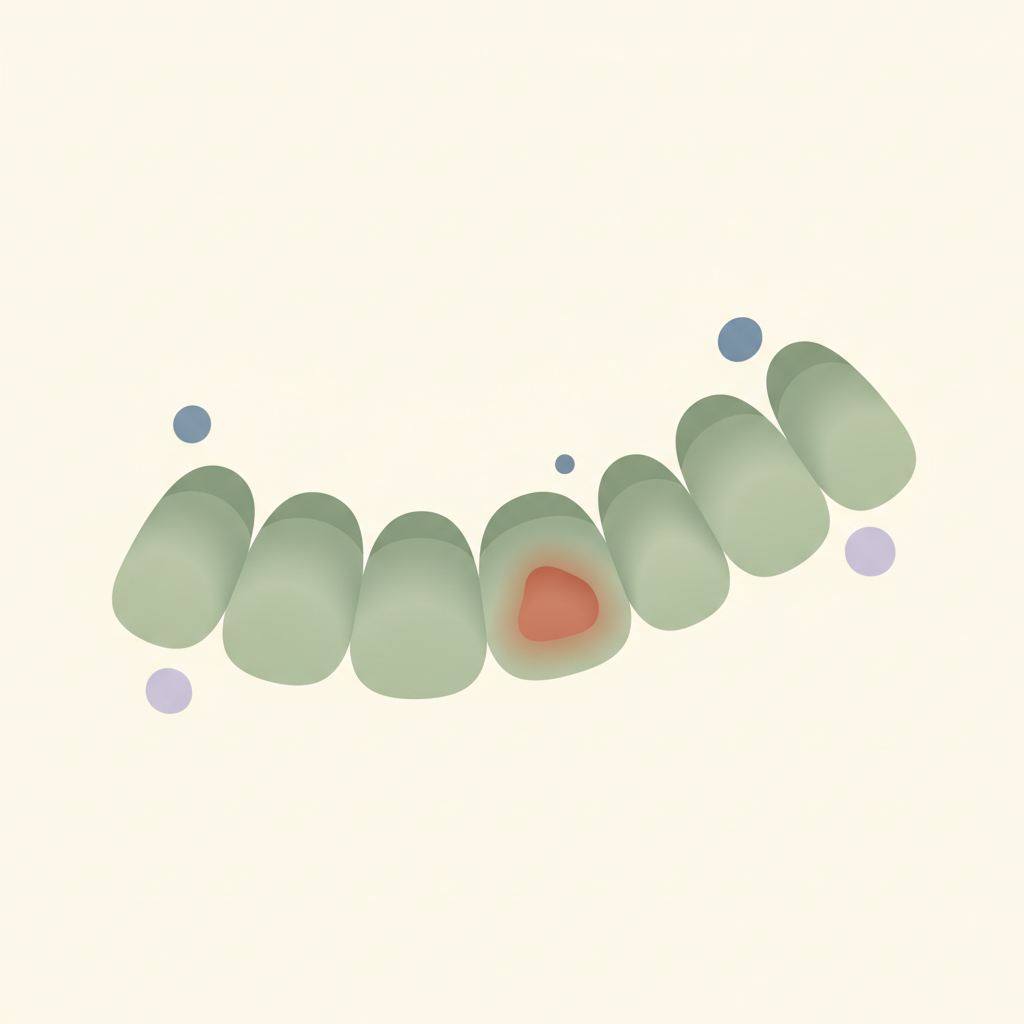
Chronic acid reflux can cause real, measurable damage to tooth enamel over time, since stomach acid reaching the mouth has essentially the same erosive effect on teeth as any other acidic substance, just from an internal rather than dietary source.
How the damage typically presents
Erosion often appears on the back (tongue-side) surfaces of the upper front teeth first, since that's where acid tends to pool during reflux episodes, particularly ones happening during sleep when swallowing (which would normally help clear the acid) slows down. Increased tooth sensitivity to hot, cold, or sweet foods, and a smoother, sometimes slightly translucent appearance to the edges of teeth, can be early signs.
Why this can be a hidden reflux symptom
Because dental erosion from reflux often develops gradually and without the classic burning sensation (especially with silent reflux), it's sometimes a dentist who first raises the possibility of reflux, based on the erosion pattern, rather than the person having recognized reflux as an issue beforehand.
What helps limit further damage
Addressing the reflux itself is the most effective way to prevent further erosion, alongside dental habits like rinsing with water (rather than brushing immediately) after a reflux episode, and using a soft-bristled toothbrush. Your dentist can also apply treatments like fluoride varnish to help strengthen remaining enamel and monitor for further changes.