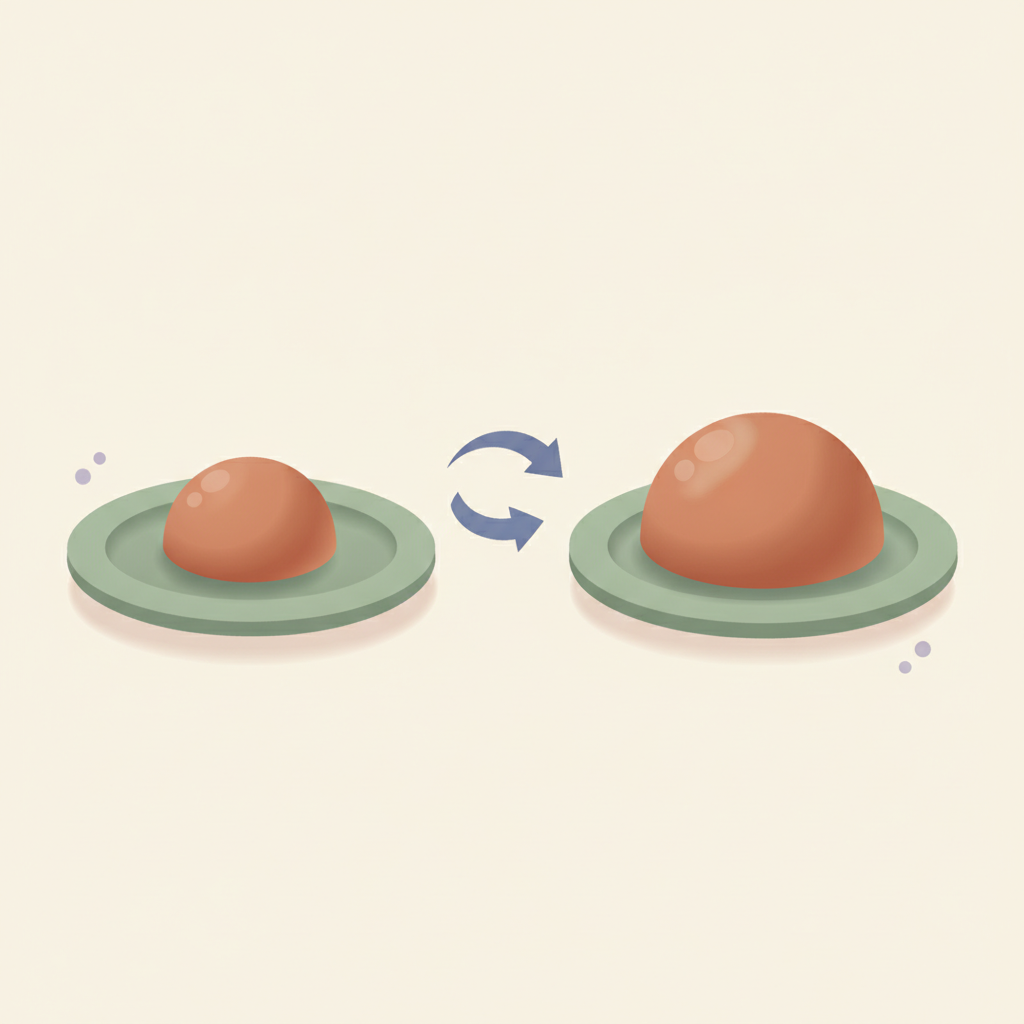
Portion size is one of the most underrated reflux variables, partly because it's less interesting to talk about than specific trigger foods, but the mechanism is simple and consistent: a larger meal means more volume and pressure in the stomach, which pushes more directly against the lower esophageal sphincter regardless of what the food actually is.
Why smaller, more frequent meals often help
Splitting the same total food intake across four or five smaller meals instead of two or three large ones reduces the peak pressure the stomach experiences at any one time. This is one of the more consistently recommended changes for people with frequent reflux, even before specific foods are addressed.
A practical way to right-size meals
Using a smaller plate, serving from the stove or counter rather than family-style at the table, and pausing partway through a meal to check in on fullness are all simple ways to reduce portion creep without tracking every gram of food. Eating slowly matters here too — it takes about twenty minutes for fullness signals to catch up, and eating quickly makes it easy to overshoot a comfortable portion before you notice.
This is a change that costs nothing and often produces results within days, which makes it worth trying before more restrictive dietary changes.