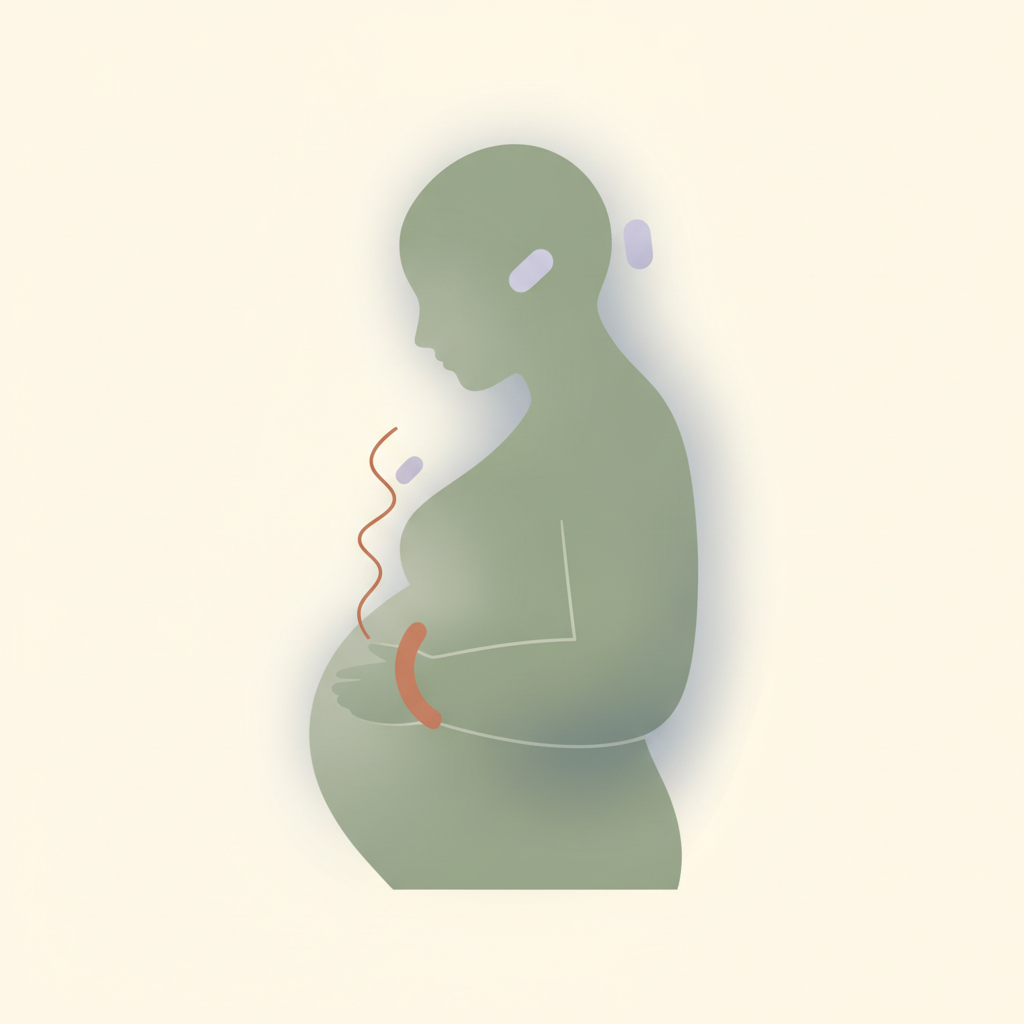
Reflux is extremely common in pregnancy, affecting a majority of people at some point, and it has two clear, well-understood causes. Hormonally, rising progesterone relaxes smooth muscle throughout the body to support pregnancy, and the LES is smooth muscle too — so it relaxes along with everything else, making reflux more likely even early on. Mechanically, as the uterus grows, it puts increasing pressure on the stomach, especially in the second and third trimesters, pushing contents up against a valve that's already more relaxed than usual. This combination is why reflux often starts or worsens as pregnancy progresses and why it's so common even in people who never had reflux before. It typically improves after delivery, once both the hormonal and mechanical pressures resolve, though the timeline varies by person.