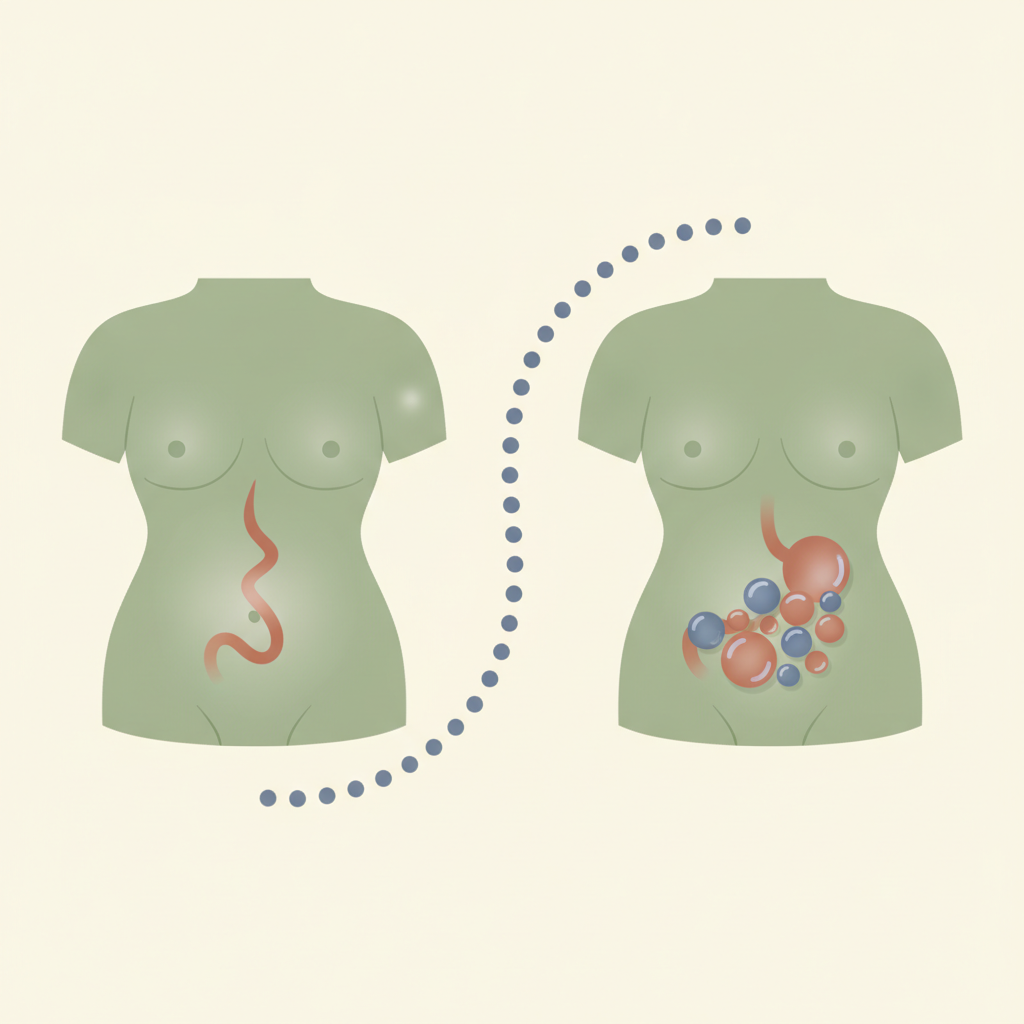
The two get used interchangeably, but they describe different things. Indigestion (dyspepsia) is a broader term for discomfort centered in the upper stomach — fullness, bloating, mild nausea, an ache after eating. Reflux is more specific: it's acid or stomach contents traveling up into the esophagus, producing the classic burning sensation behind the breastbone, often with a sour taste reaching the throat or mouth.
The key difference in location and sensation
Indigestion tends to sit in the stomach and upper abdomen. Reflux is felt higher up, tracking behind the breastbone and sometimes into the throat, and it's the one associated with a sour or bitter taste, since it's actual stomach contents moving upward rather than just discomfort from digestion.
They can overlap
It's common to have both at once — a heavy, fatty meal can cause stomach fullness (indigestion) and also relax the LES enough to cause reflux. If your main complaint is burning and a sour taste, that points to reflux; if it's more fullness, bloating, and general stomach discomfort without the burning or sour taste, that leans toward indigestion. Tracking which symptoms show up together helps clarify which one you're actually dealing with, which in turn shapes what's worth trying first.