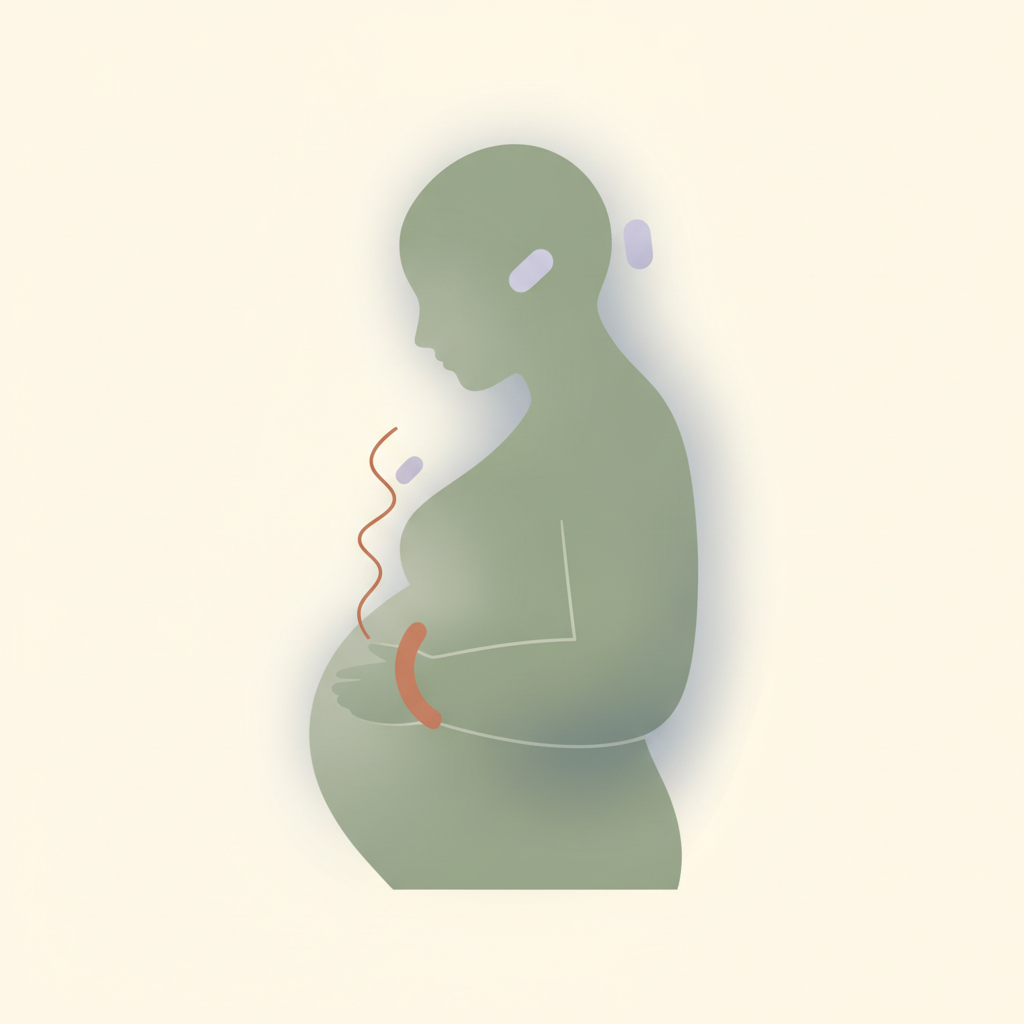
For most women, pregnancy-related reflux improves substantially or resolves within the first couple of weeks after delivery, as the mechanical pressure from the uterus is immediately relieved, though the full picture is a bit more nuanced.
Why some symptoms can linger
Hormone levels, particularly progesterone, don't return to pre-pregnancy levels instantly, and some residual LES relaxation can persist for a period afterward. Additionally, if pregnancy involved significant weight gain that hasn't yet been lost, some of that added abdominal pressure may still be a factor in the weeks immediately following delivery.
When postpartum reflux is worth addressing directly
If reflux symptoms persist well beyond the first few weeks postpartum, rather than steadily improving, it's worth treating as its own issue and discussing with a doctor rather than assuming it will resolve entirely on its own timeline, especially if it's affecting sleep during an already exhausting period.
A practical note for new parents
Irregular eating patterns that often come with caring for a newborn — skipped meals, eating quickly, eating late at night during feeding schedules — can independently contribute to reflux symptoms during this period, separate from the pregnancy-related hormonal factors, which is worth keeping in mind if symptoms seem to fluctuate with your own eating patterns rather than a steady trend of improvement.