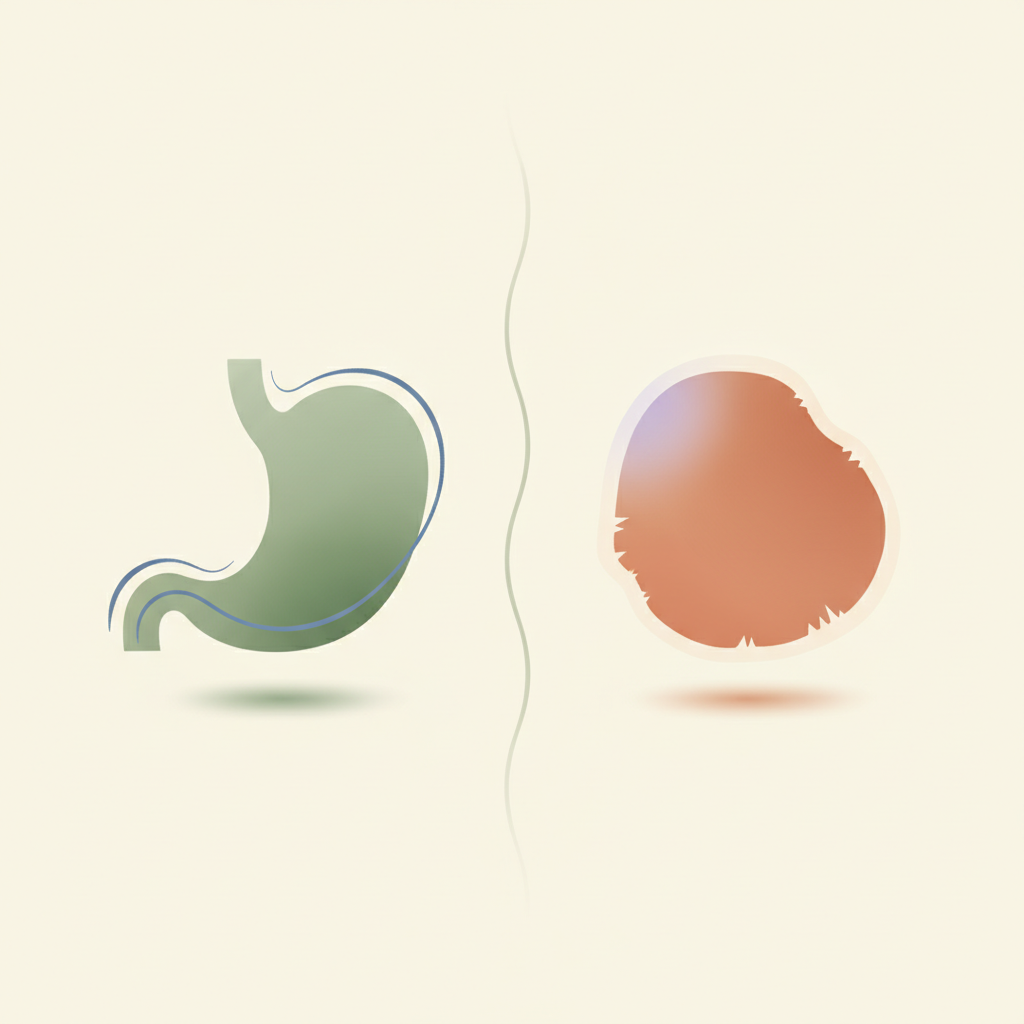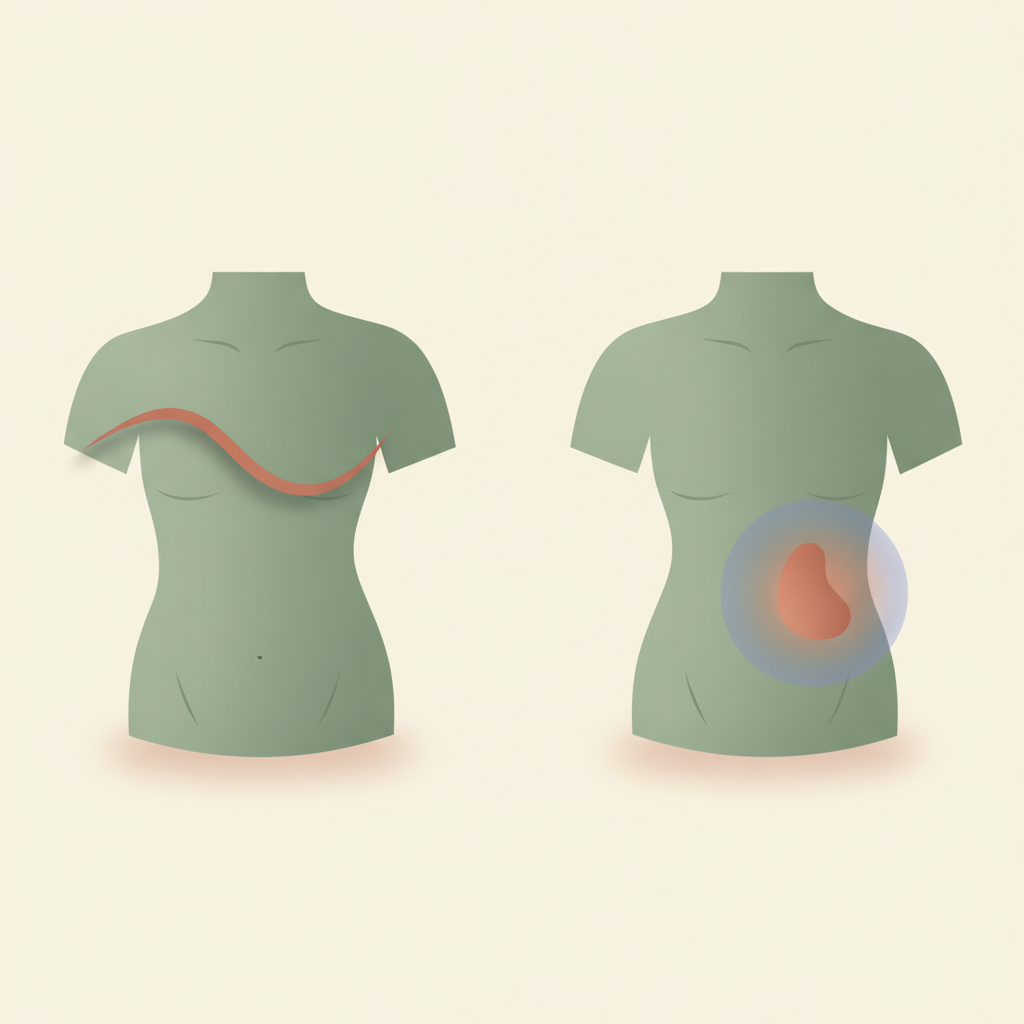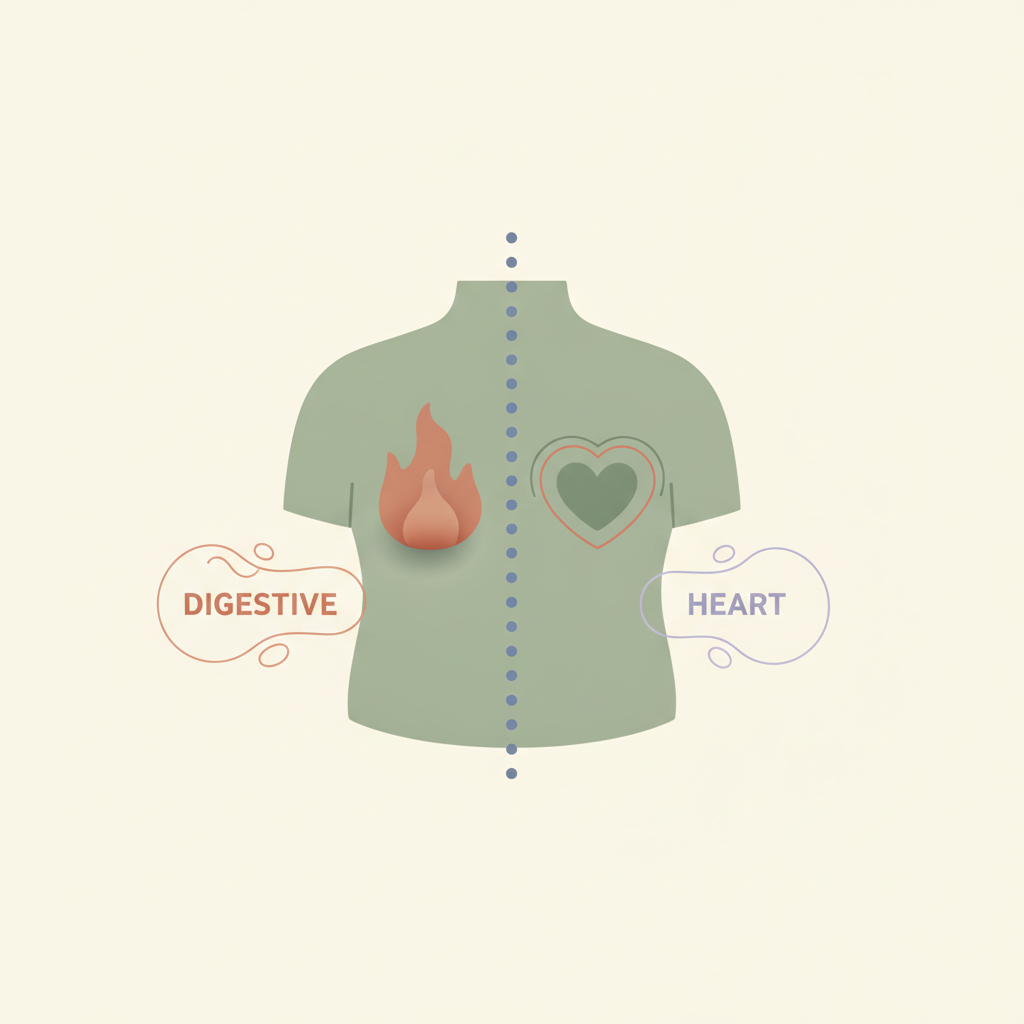
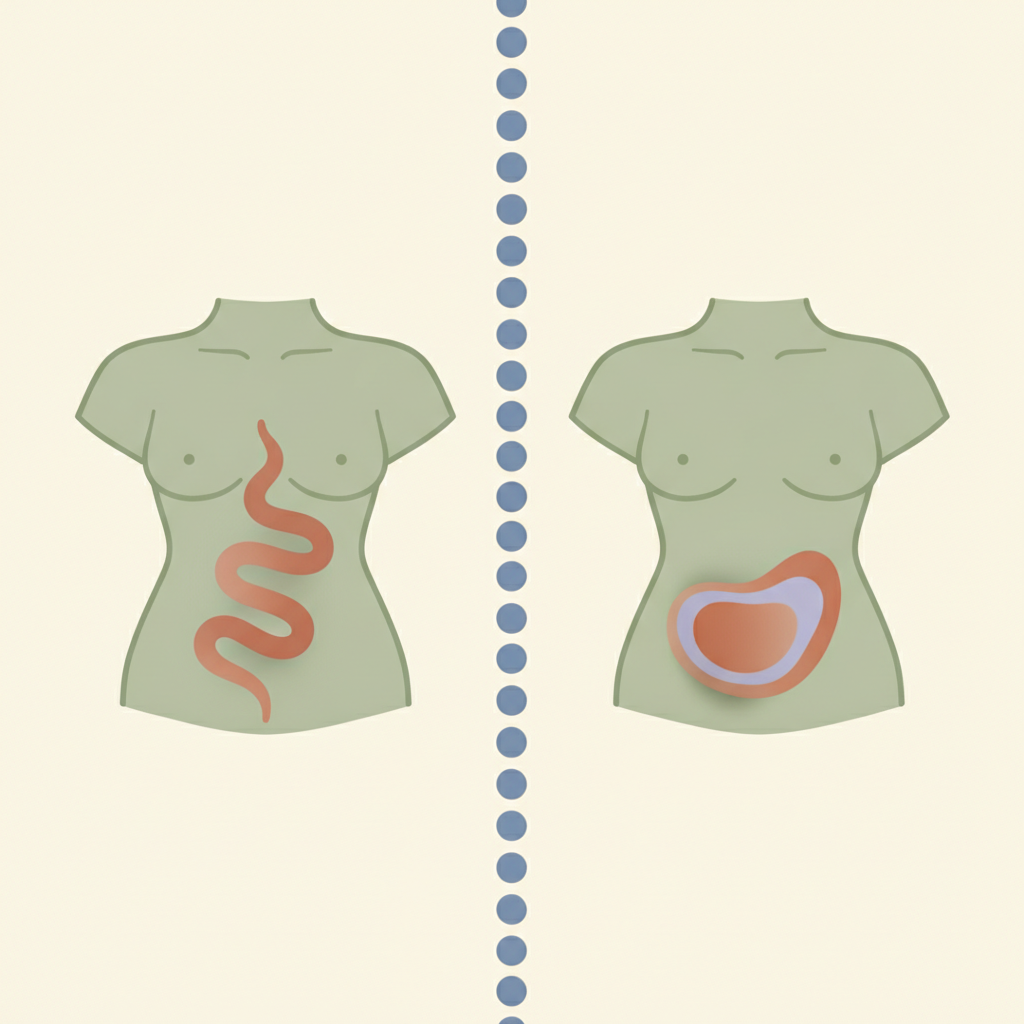
GERD and gastritis can feel similar — both can cause upper abdominal discomfort — but they're distinct conditions affecting different tissue, and the distinction matters for treatment.
What separates them
GERD involves acid moving up from the stomach into the esophagus, with symptoms centered around burning behind the breastbone and regurgitation. Gastritis is inflammation of the stomach lining itself, often causing a gnawing or burning pain more centered in the upper stomach, sometimes with nausea, and it can have different underlying causes, including H. pylori infection, long-term NSAID use, or excessive alcohol use.
Why they can be confused
Both conditions can cause upper abdominal burning and discomfort, and both can be worsened by similar foods (spicy, fatty, acidic). It's also possible to have both conditions simultaneously, which can make symptoms harder to distinguish.
How the distinction is typically made
Endoscopy can visually distinguish gastritis (inflamed stomach lining) from esophagitis (inflamed esophagus from GERD), and testing for H. pylori is often part of a gastritis workup specifically. If over-the-counter reflux treatment isn't improving your symptoms, that's a signal the underlying issue might be something other than typical GERD, worth discussing with a doctor rather than continuing to self-treat based on an assumption.