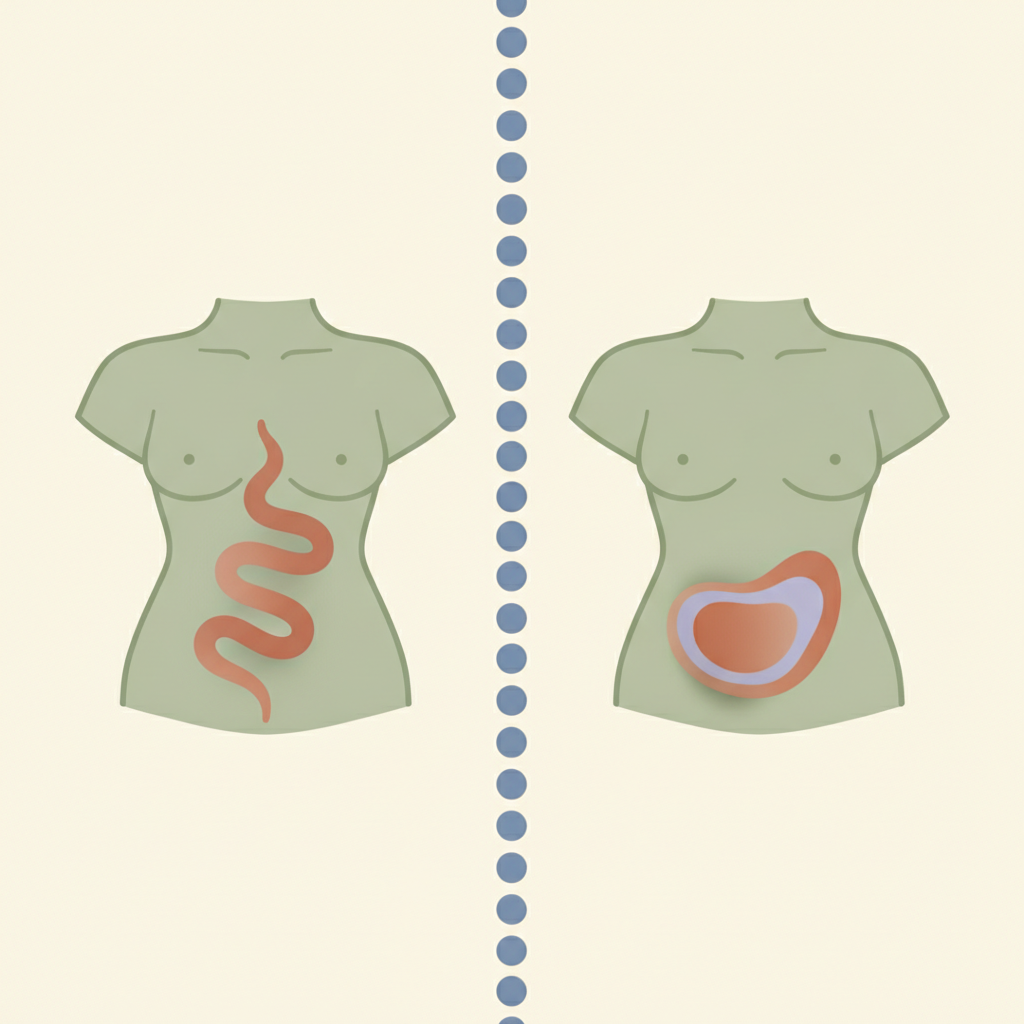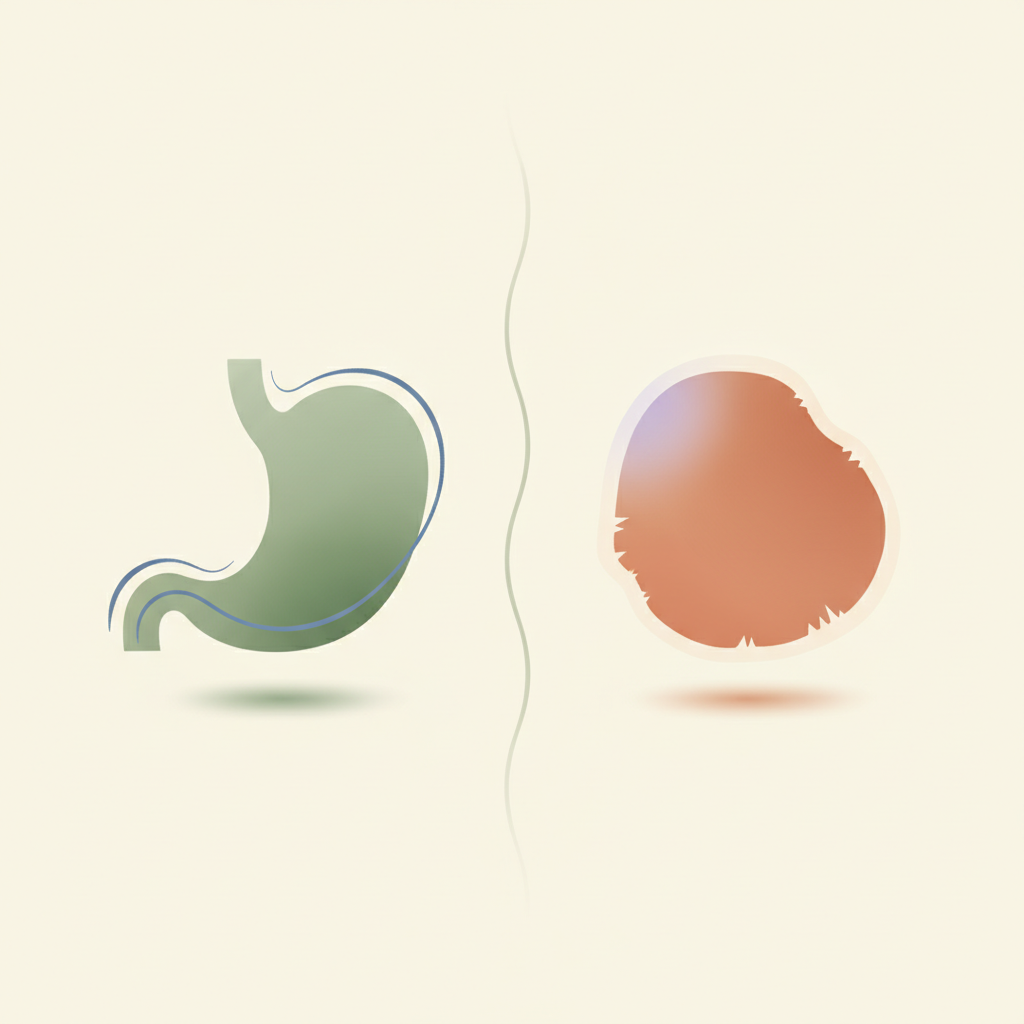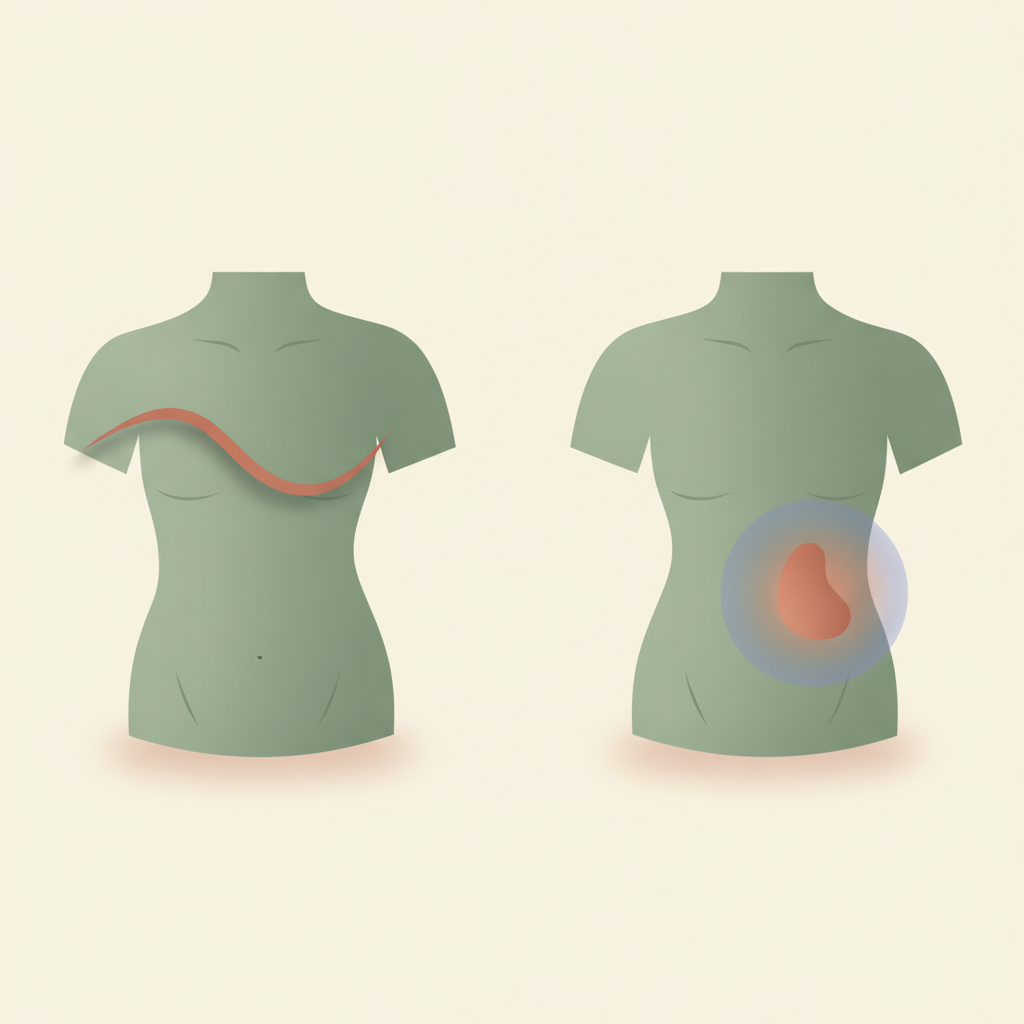
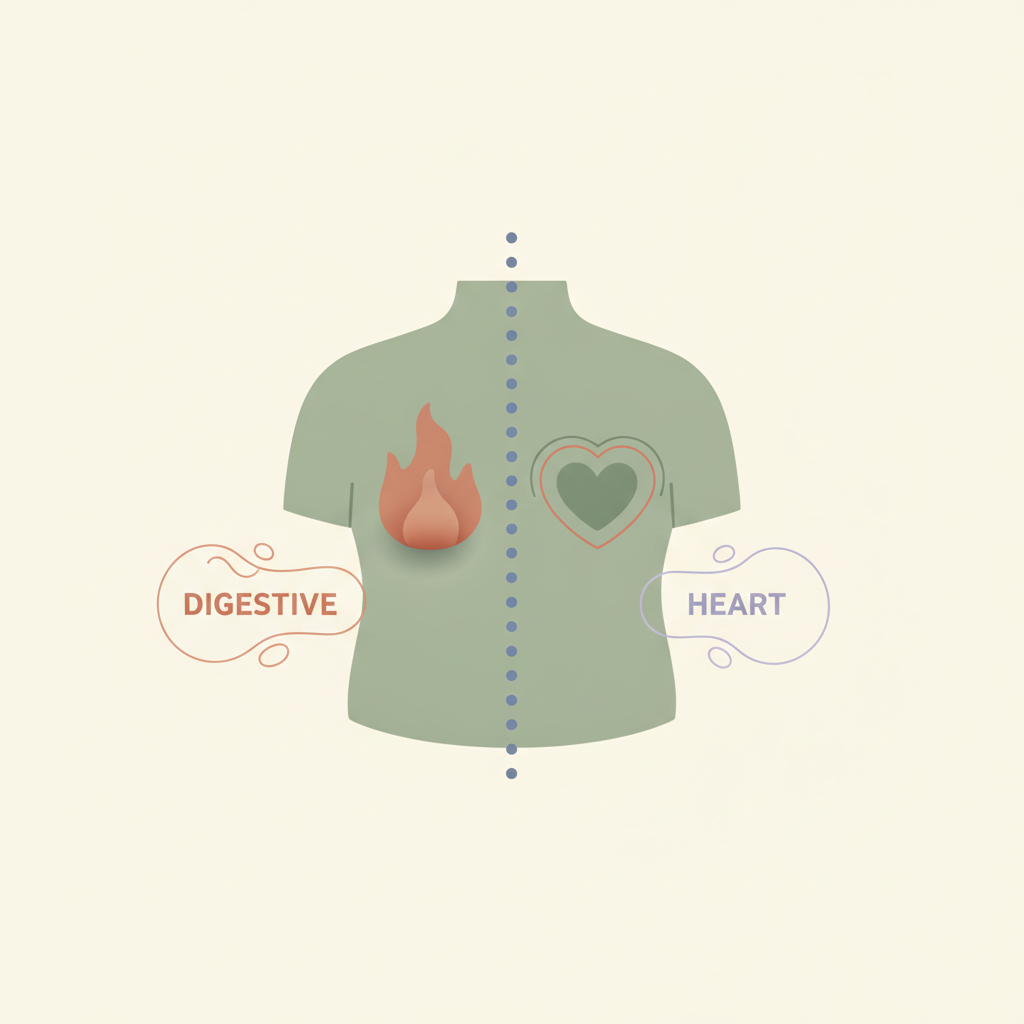
This is one of the most important distinctions to understand, since the consequences of getting it wrong — dismissing a heart attack as heartburn — can be life-threatening. When in doubt, treat chest pain as a potential emergency rather than trying to self-diagnose.
Signs that lean toward heartburn
A burning sensation behind the breastbone that's related to eating, worse when lying down, and improves with antacids or sitting upright is more typical of reflux. It's usually accompanied by a sour taste or regurgitation and tends to be a familiar sensation if you've experienced heartburn before.
Signs that warrant emergency evaluation
Chest pain or pressure that feels like squeezing, crushing, or heaviness (rather than burning); pain radiating to the arm, jaw, neck, or back; shortness of breath; breaking out in a cold sweat; nausea or lightheadedness alongside chest discomfort; and pain that doesn't improve or worsens are all signs that need immediate emergency evaluation — call emergency services rather than waiting to see if it passes or trying an antacid first.
Why self-diagnosis is genuinely risky here
Heart attack symptoms, especially in women, older adults, and people with diabetes, don't always present with classic "crushing chest pain" and can sometimes feel more like indigestion or burning, which is exactly why this distinction is dangerous to get wrong. If there's any real uncertainty, especially with new or unusual chest discomfort, err on the side of emergency evaluation rather than assuming it's heartburn.
This isn't personal medical advice, and it isn't a substitute for emergency care. Any chest pain that's severe, new, or accompanied by the warning signs above needs immediate medical attention, not a wait-and-see approach.