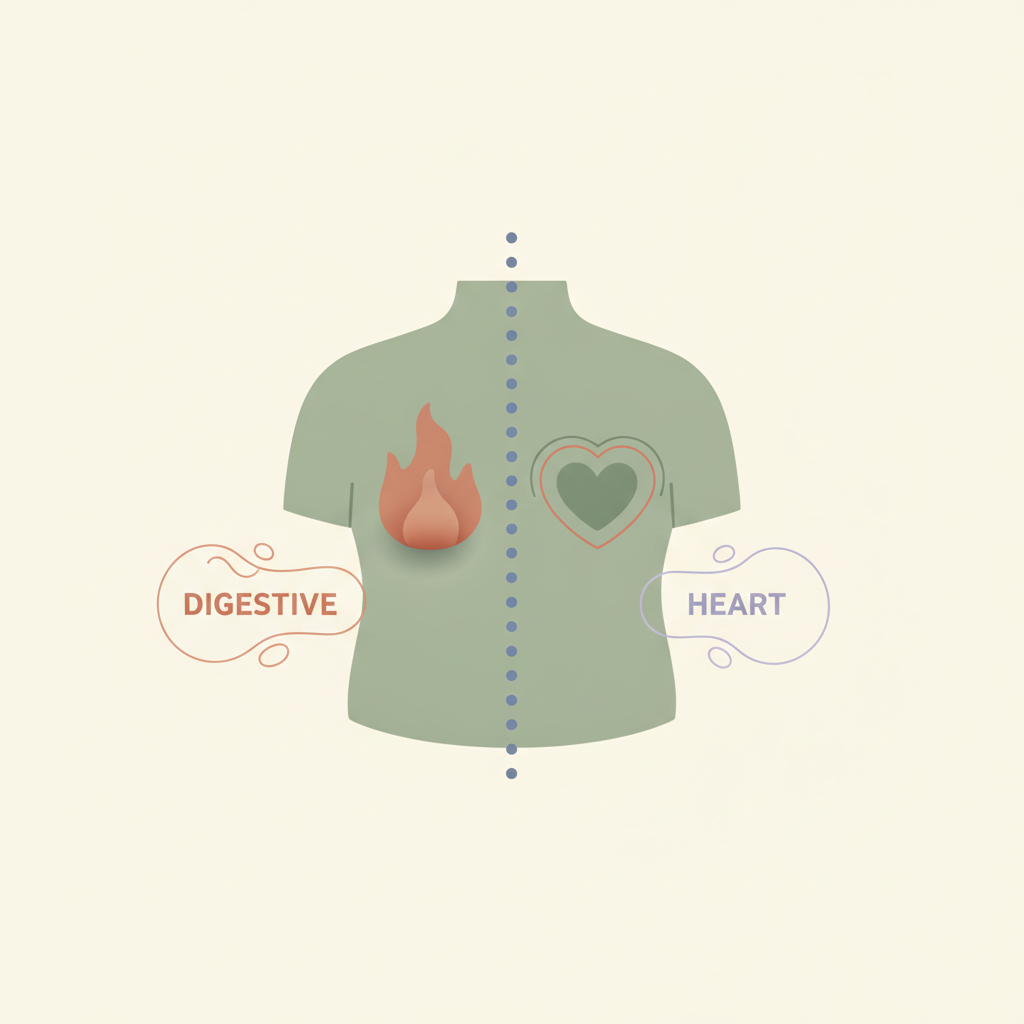
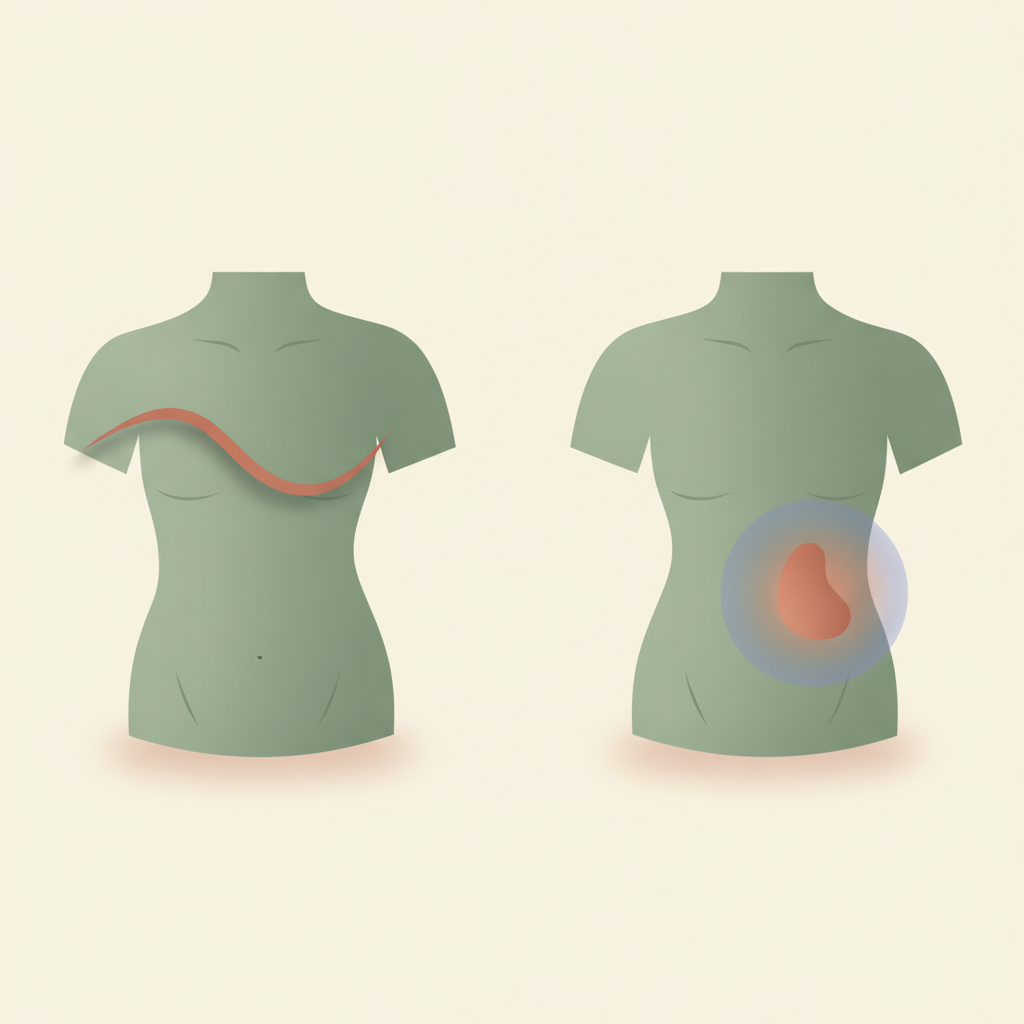
Gallbladder pain and reflux can both cause upper abdominal discomfort after eating, particularly after fatty meals, which makes them worth distinguishing carefully.
Key differences in location and character
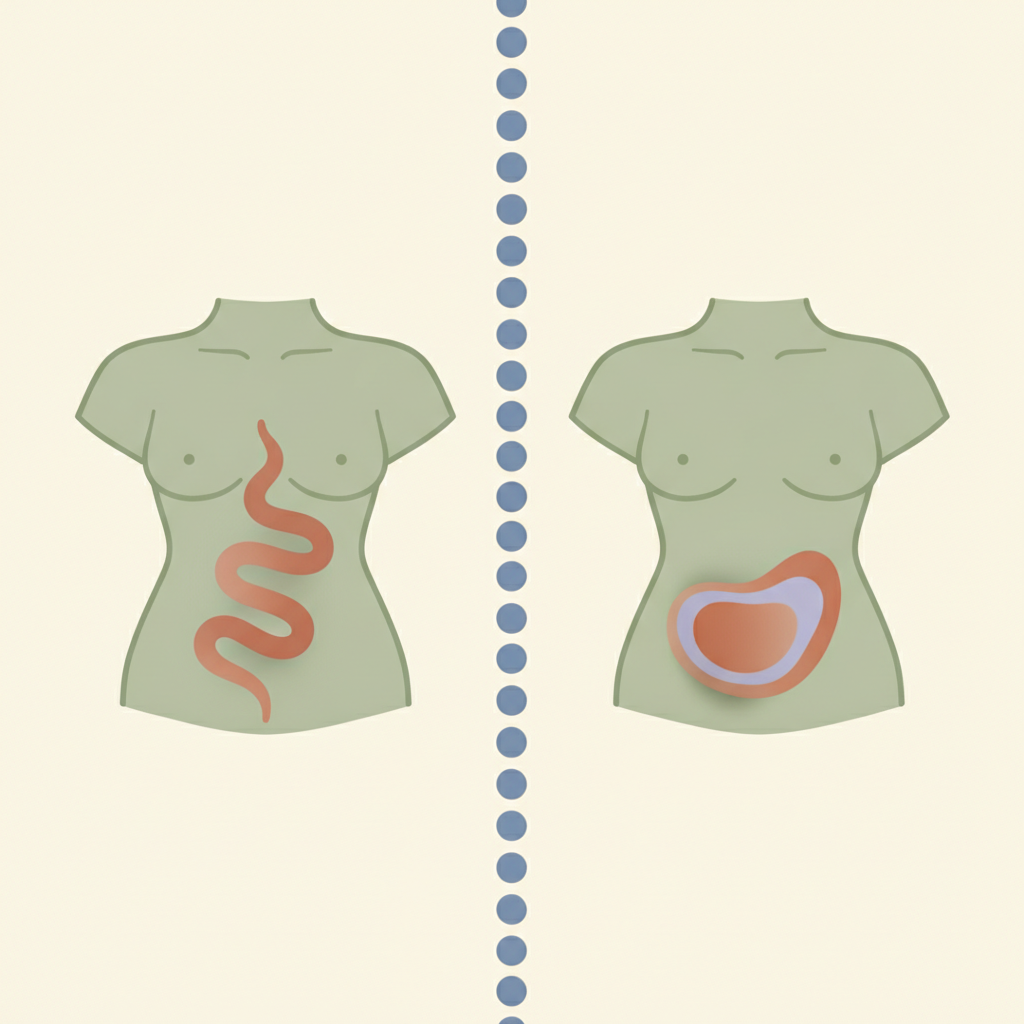
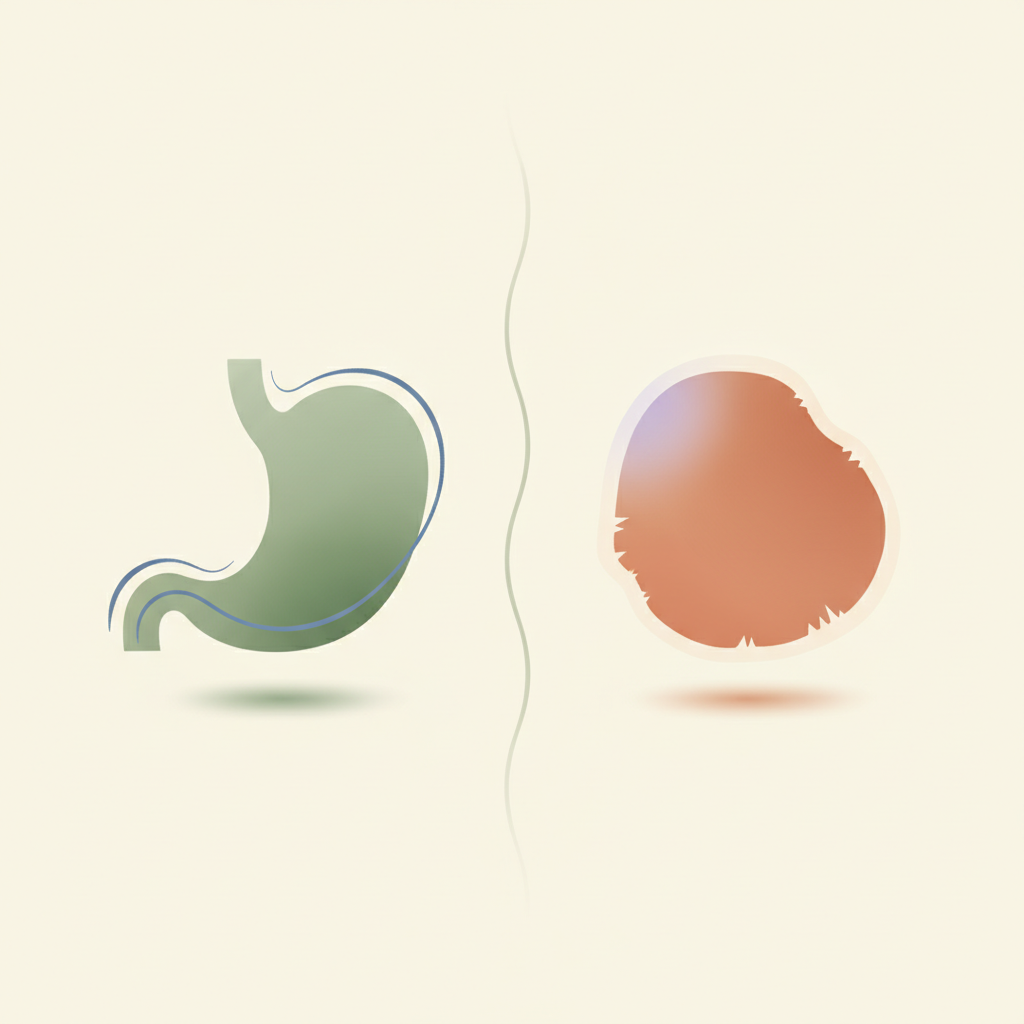
Gallbladder pain (often from gallstones) is typically felt in the upper right abdomen, sometimes radiating to the right shoulder or back, and tends to come in more distinct, often severe episodes rather than the more diffuse burning associated with reflux. Reflux is more centrally located behind the breastbone and often includes a sour taste or regurgitation, which gallbladder pain typically doesn't.
Timing patterns worth noting
Gallbladder pain classically occurs thirty minutes to a few hours after a fatty meal and can last from minutes to several hours in a fairly intense episode, sometimes accompanied by nausea or vomiting. Reflux symptoms are often more immediate after eating or worsen with lying down, and tend to be less severe but potentially more prolonged or recurring throughout the day.
When gallbladder involvement should be considered
Severe, episodic right-upper-abdomen pain, especially with nausea, vomiting, or fever, warrants prompt medical evaluation rather than being managed as reflux, since a gallbladder attack (particularly with a blocked bile duct) can become a medical emergency. An ultrasound is the typical first test to evaluate the gallbladder specifically, which is different from the tests used to evaluate reflux.